
What lives in the Observatory
Open "Observatory" in the main menu. Along the top sits a row of tabs: Coverage, Citations, Page Intelligence, AI Referrals, Insights, Search Presence, Prompts, and Trends. The Citations tab, and where its data actually comes from, is covered in Tracking AI citations in the Observatory and How RankAbove sources citation data. This article covers everything else.
How often the data refreshes
RankAbove Observatory actively queries the major AI engines, ChatGPT, Claude, Brave, Perplexity, and Gemini, with Grok coming soon, plus Google, to track how often your content is cited. Citation tracking runs daily at 4 AM UTC. SERP features are tracked weekly, on Sundays. The methodology is grounded in published academic research (ACM KDD 2024), the same rigor described in How RankAbove sources citation data.
Coverage: per-engine strength
The Coverage tab shows one card per AI engine, each labeled Strong, Weak, Gap, No signal, or Pending based on how often it cites you, with your Cited rate (Measured) and the Traffic that engine sends you (Observed) shown side by side.
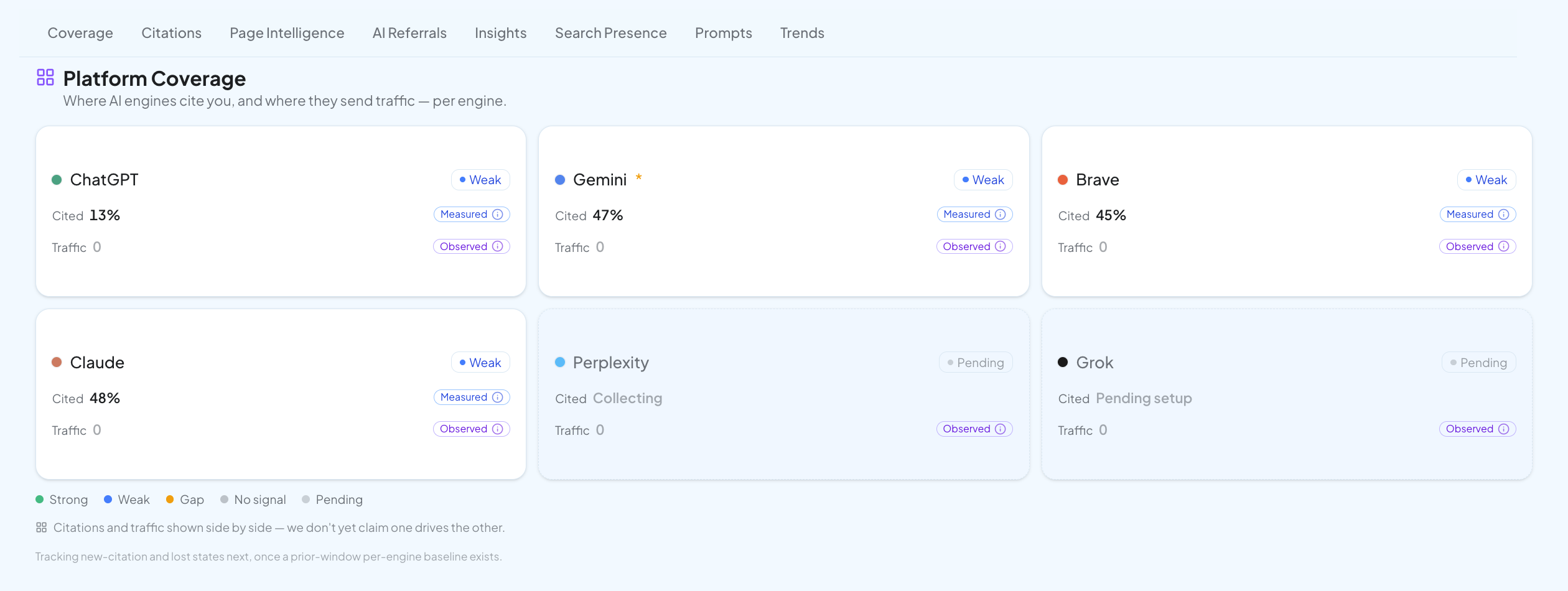
Citations and traffic are deliberately shown side by side rather than blended into one number: RankAbove does not yet claim that a citation on a given engine caused a given visit. That distinction is the same measured-versus-conclusion discipline covered in How RankAbove sources citation data.
Page Intelligence: everything about one page
Page Intelligence is one row per page, joining traffic, AI citations, SERP features, and your AEO, GEO, and SEO scores into a single view, with a Signal badge: Star (cited and getting traffic, keep doing what it's doing), Fix CTR (getting traffic but not cited, an opportunity), Improve (weak scores), or Build (too new or unscored to judge yet).

The Cross-validation column spells out the relationship in plain language, "Cited + traffic" or "Traffic, not cited, opportunity," so you can spot the exact pages where citations and visits are not yet reinforcing each other.
Search Presence: snippets, PAA, and AI Overviews
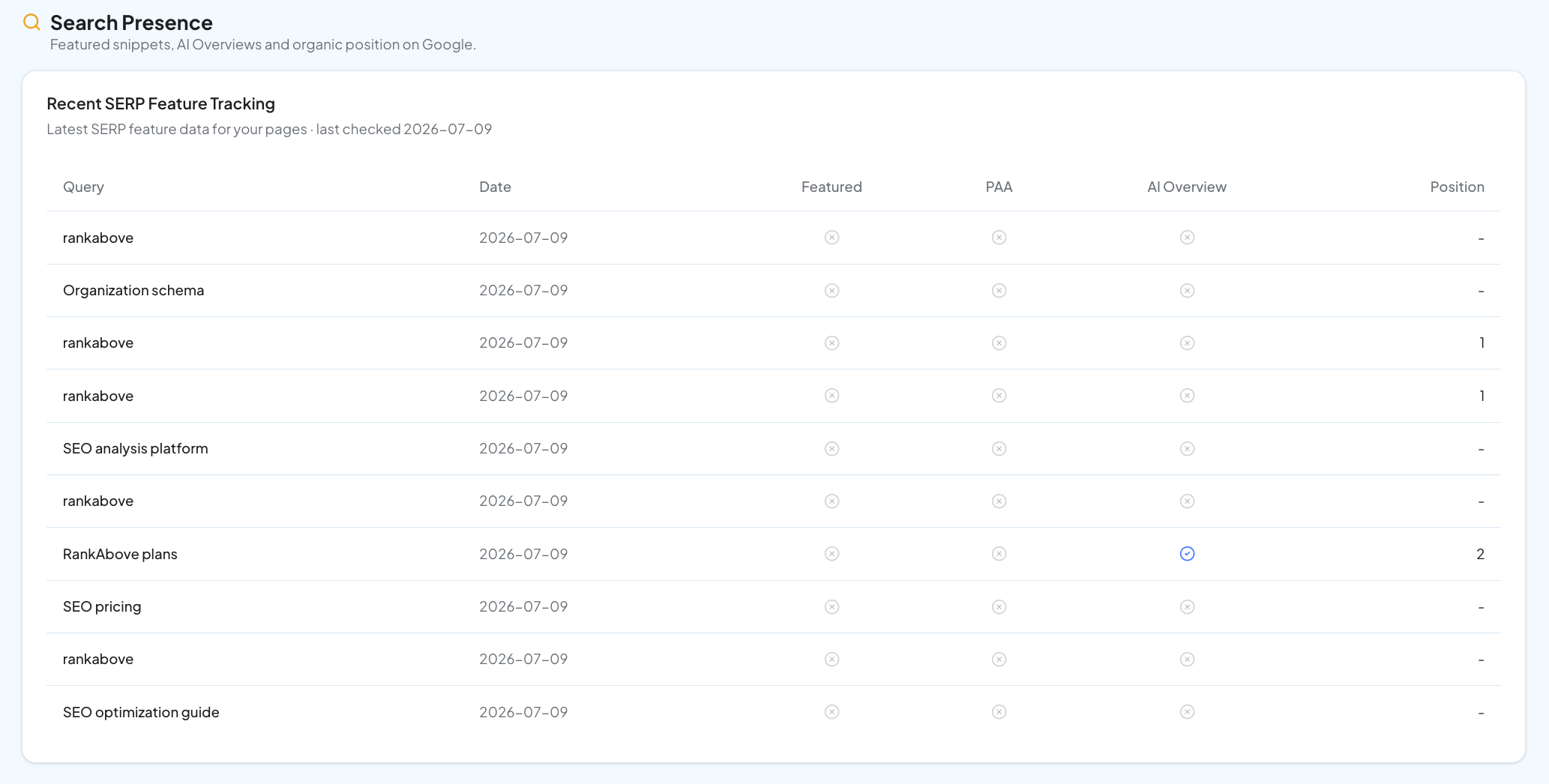
Search Presence tracks Google-specific SERP features separately from AI-engine citations: whether a query triggers a Featured Snippet, a People Also Ask box, an AI Overview, and your organic Position when one appears.
Prompts: what you are being tracked for
Prompts lists the Tracked Prompts RankAbove checks for AI citations. Most are generated automatically from your page keywords and titles; select "Add Prompt" to track a specific question your customers actually ask. Each row shows how many times the prompt has run, how many of those runs cited you, the resulting rate, and its source (auto-generated or pulled from Search Console).
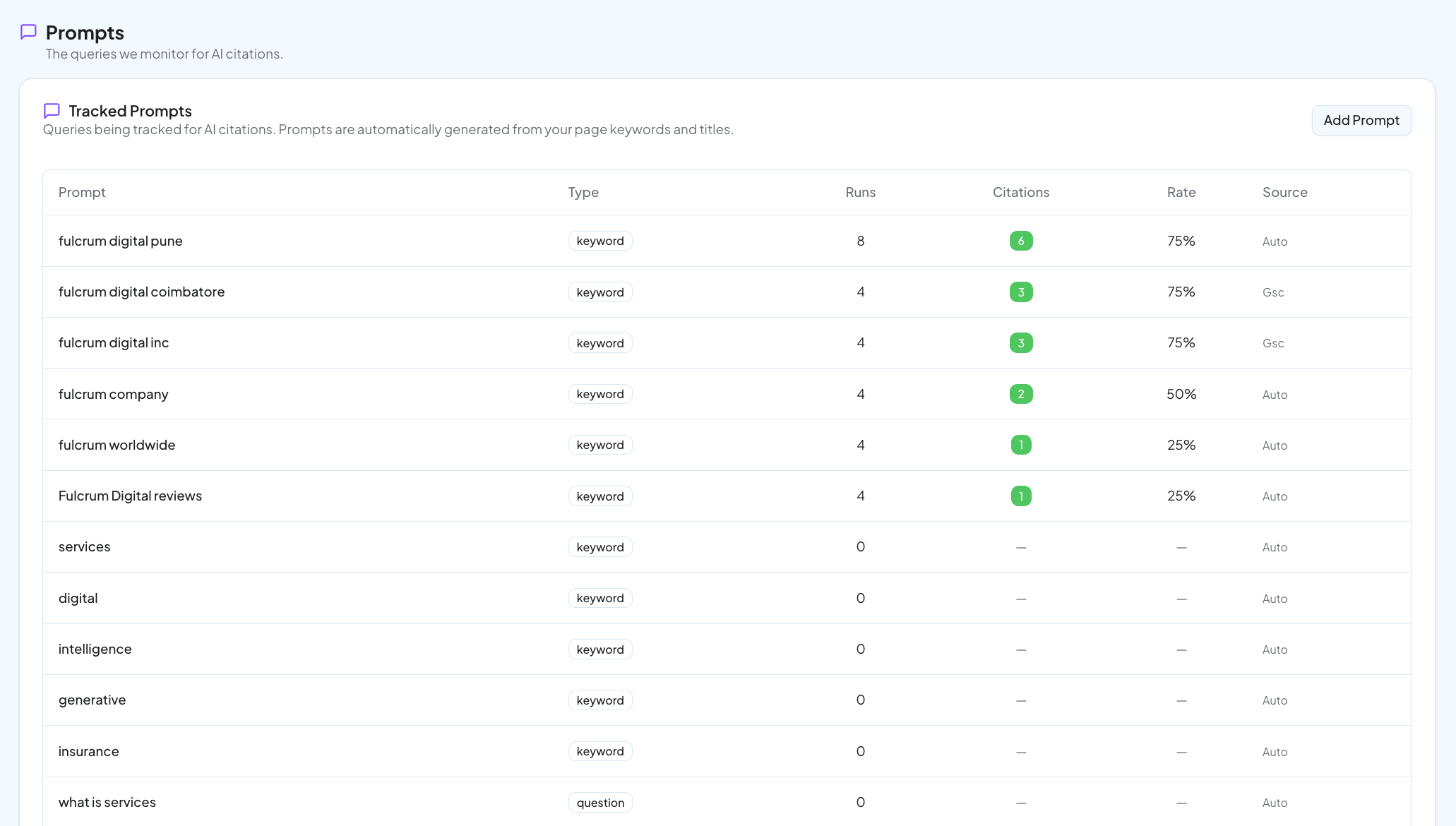
RankAbove pings the relevant SERPs, APIs, and LLMs on your behalf and tells you whether you actually show up for the prompts you care about. Where you do not, the citation-factor recommendations elsewhere in RankAbove point at what to fix.
AI Referrals: traffic AI engines actually send
AI Referrals measures visits that AI answer engines send to your site, observed directly in Google Analytics. It requires Google Analytics 4 connected; without it, the tab prompts you to connect GA4 instead of showing data.
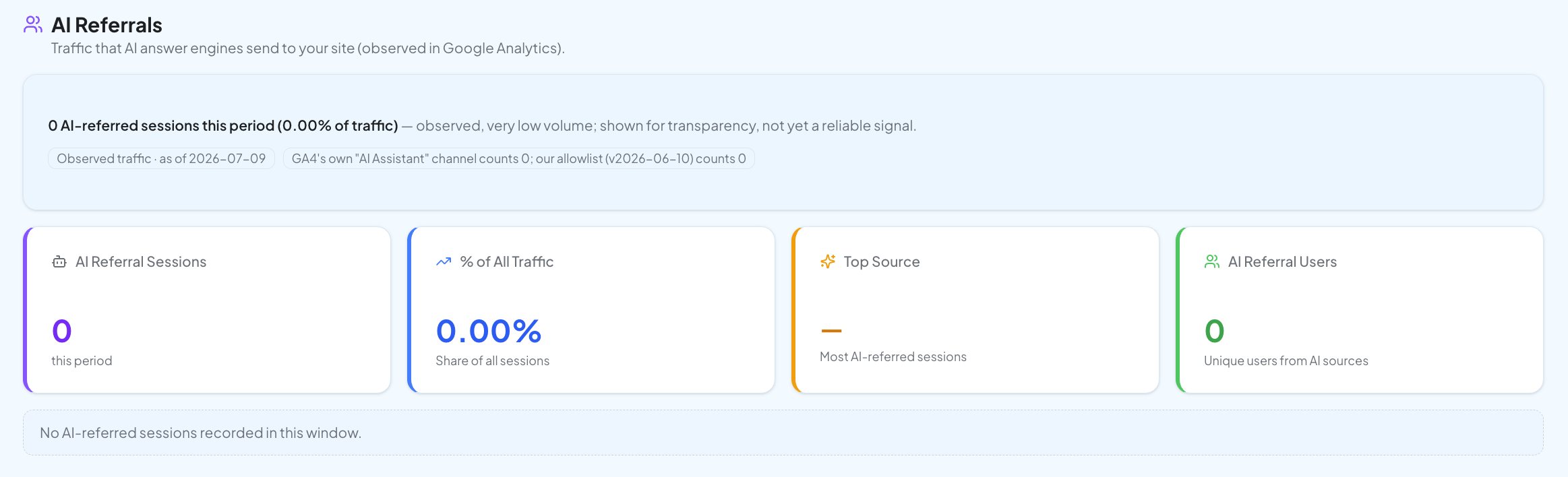
Volume here is typically very low today, and RankAbove shows it plainly rather than dressing it up: a result like "0 sessions, 0.00% of traffic" is labeled as observed but not yet a reliable signal, not hidden or rounded up.
Insights: the Content Opportunity Matrix
Insights ranks your pages by an opportunity heuristic built from traffic and engagement, surfacing where attention is most likely to pay off. Like AI Referrals, it depends on GA4 being connected.

Treat the ranking as a prompt to investigate, not a validated outcome. A high-opportunity page is worth a look this cycle; it is not a guarantee of what optimizing it will return.
Trends: performance over time
Trends charts Citation Rate Over Time and SERP Feature Performance (featured snippets and AI Overview citations) across the date range you select. This is the view for judging a monthly cycle honestly, and the one worth screenshotting for reporting.

Action Priority List and Executive Insights
Below the main tabs, RankAbove surfaces an Action Priority List, pages to look at first, ranked by reach times headroom (high traffic, high bounce), alongside Executive Insights, plain-English, descriptive observations about your traffic this period.

Both are intentionally worded as prompts to investigate rather than promises: RankAbove labels these observations as descriptive, not causal, the same discipline behind every statistic in How RankAbove sources citation data.
A monthly loop
A practical rhythm: after each 30-day cycle, check Trends for the pages you changed, scan Insights and the Action Priority List for next month's candidates, and review Page Intelligence for pages that moved from "Fix CTR" to "Star." Ten minutes here sets up the next cycle's priorities.