
A peer-reviewed baseline, treated as a hypothesis
We started with a peer-reviewed baseline: the Generative Engine Optimization research published at ACM KDD 2024. That gave us a scientifically grounded framework for what should drive AI citations. But we treat that paper as a hypothesis, not gospel. Some of its headline recommendations haven't held up when retested in 2026, and that's exactly the point. Our system, DataLab, exists to test the framework against our own measured citation data and re-anchor it wherever the evidence disagrees. Pre-registered hypotheses, real significance thresholds, corrections for multiple comparisons. It's the scientific method applied to search optimization, and the product gets more accurate the more it's used, because every analysis feeds the research pipeline.
Where the data comes from
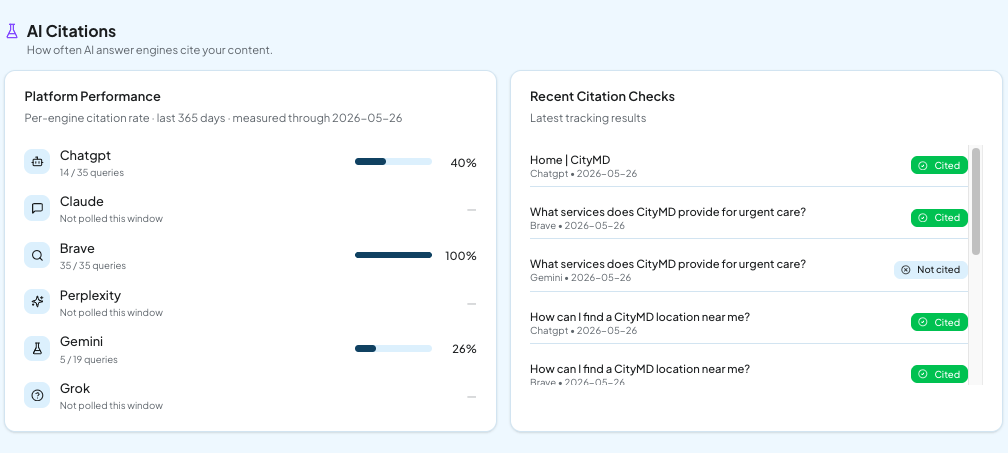
Here's the data that powers it. When a page is analyzed, that page is put into the tracking pool. For each page you track, RankAbove assembles real search queries, anchored in the actual Google searches your page already receives. Daily, we run those queries against the major AI engines through their official APIs with live web search enabled, and read the structured list of sources each engine says it used. We match your domain exactly against that list. When an engine merely mentions you in its answer text without sourcing you, we record that separately and never count it the same as a real citation.
What you see
The result is a per-page, per-engine citation rate you can watch over time: edit your content, see whether the engines start citing you.
Our statistical bar
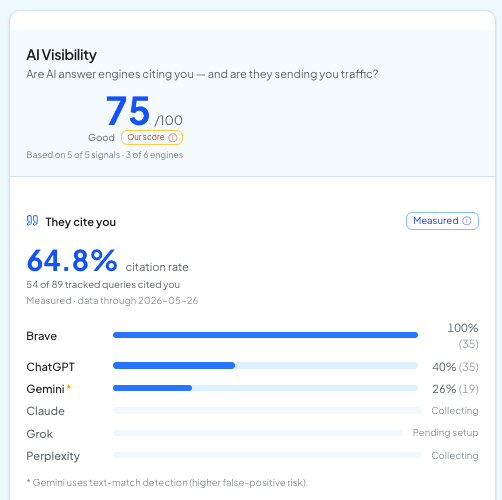
Our validation system is built with pre-registered hypotheses and significance thresholds. We show you measured data as measured. Your real, observed citation rates. What we withhold is conclusions: we never present a technique or recommendation as proven to work until it clears that bar. Until then it's treated as unproven, internally and externally. No one should change their content strategy on a whisper.